

HIRING FOR ADAPTABILITY – THE NEW RULES
For years hiring managers have been asking, “What tools have you used?”
This question made sense for a long time. A tidy list of software, certifications, and platforms was a decent proxy for whether someone could do the job they were interviewing for. But the tools themselves aren’t holding still long enough to be a reliable filter anymore.
The World Economic Forum has pointed out that the half-life of a skill — the point at which it’s lost half its relevance — has gone from roughly 30 years to about seven, meaning a typical career now involves overhauling your skill set several times over. So roughly eighteen months from now, the software proficiency you’re screening for today might be just a footnote. That’s exactly why more and more employers are hiring for adaptability instead of locking in on a fixed list of past experience.
At Lloyd Staffing, this is the natural next chapter of two conversations we’ve already been having with clients: what the resume is turning into, and how AI is reshaping workforce strategy. The connection between all three is the same. The old signals of a good hire — degrees, tenure, a stack of familiar tool names — are losing predictive power. What’s replacing them is something harder to put on a checklist, and much more important to get right.
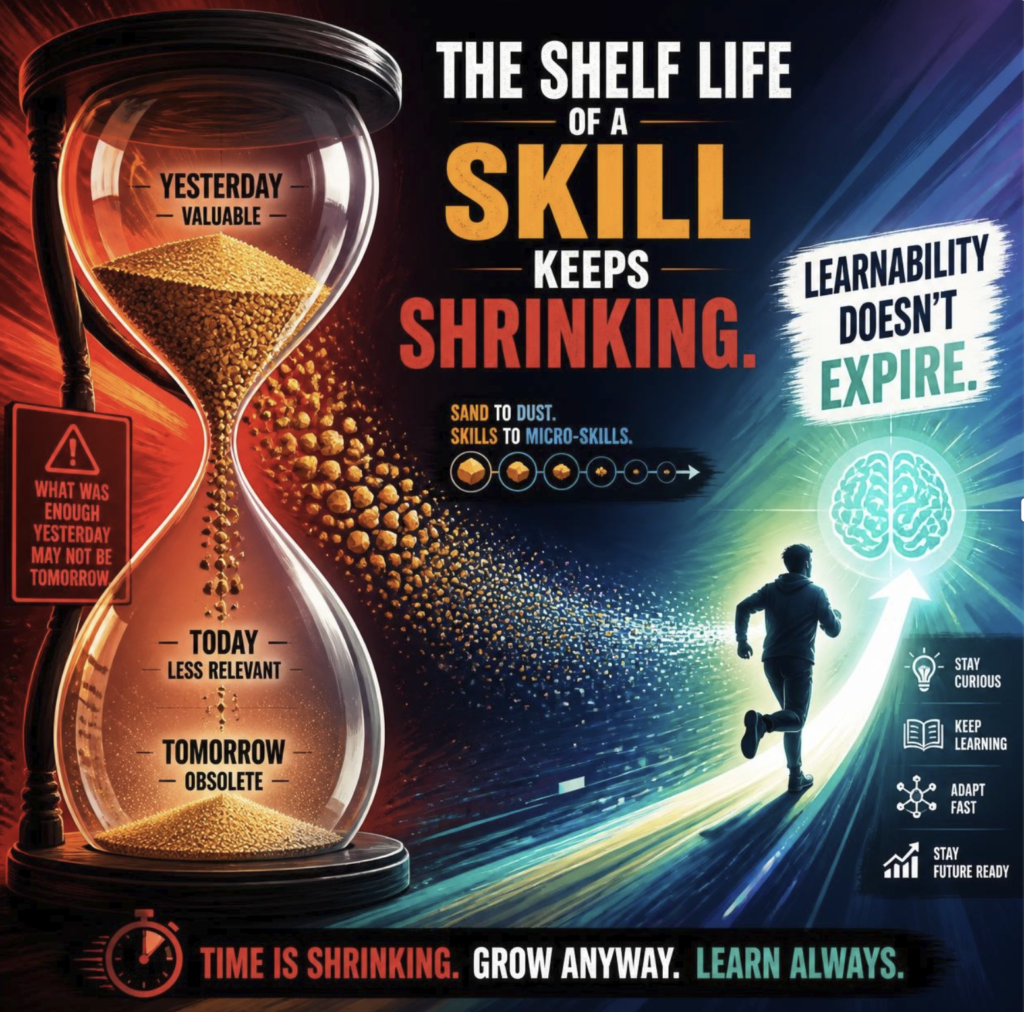
That doesn’t mean skills stop mattering. They don’t — and skills-based hiring deserves credit here. It’s opened doors for people without a four-year degree, widened the candidate pool, and given employers a faster way to spot people who can actually do the work rather than people who look good on paper. According to NACEWeb.org, seventy percent of employers now use some form of skills-based hiring, up from 65% just a year ago, and most lean on it heavily during both screening and interviewing. That’s not a fad– it’s the new reality.
But a resume, even a skills-forward one, is still a snapshot. It tells you what someone could do as of the day they wrote it. It doesn’t tell you what they’ll be capable of the next time the ground shifts — and across the industries Lloyd recruits for, from IT and finance to supply chain, creative, and people operations, the ground keeps shifting on different timelines and for different reasons.
That’s where learnability comes in.
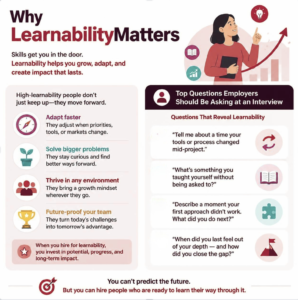
Learnability is exactly what it sounds like: the desire and the capacity to pick up new capabilities quickly, without someone holding your hand through it. It’s not a soft skill you can bullet-point. It shows up in how someone handles not knowing something yet. Business school researchers writing in AACSB’s insights journal put it simply — people become more willing to learn when they’re made aware of a gap in what they know, especially when that gap feels a little uncomfortable. We believe the candidates worth betting on, are the ones who lean into that discomfort instead of avoiding it.
Recruiters are already sensing this shift in what actually predicts a good hire. In LinkedIn’s Global Talent Trends research, 92% of hiring professionals said soft skills like adaptability and problem-solving matter as much as — or more than — hard skills. Technical ability gets someone in the door. Learnability is what keeps them valuable once they’re through it.
FIVE ADAPTABILITY INTERVIEW QUESTIONS THAT ACTUALLY WORK…
You can’t put “adaptable” on a skills matrix and check a box. You have to change the questions. That shift starts with hiring for adaptability at the interview stage, not after someone’s already on the team.
 Stop asking what they’ve used. Start asking how they’ve adapted. Instead of “What CRM platforms have you worked in?” try … “Tell me about a time your team’s process or tools changed mid-project. What did you do first?” This replaces “What CRM platforms have you worked in?” You’re not looking for the right software name. You’re looking for how they moved — did they get curious, or did they stall?
 Ask about the thing they didn’t know how to do yet. “Describe a project where you had to learn something on the fly to get it done.” The specifics matter less than the posture. Did they seek out a mentor, dig into a tutorial, ask smart questions? Or did they wait to be told?
 Probe for how they handle being wrong. Adaptable people update quickly when new information contradicts what they believed. Ask candidates about a time their initial approach didn’t work, and listen for whether they pivoted with curiosity or got defensive.
 Look for evidence of self-directed growth. Someone who’s picked up a certification, a language, or a new discipline on their own time — without an employer requiring it — is showing you exactly the kind of muscle and motivation you want on your team.
 Weigh potential alongside proof. A candidate with two years of the “right” experience, but a track record of standing still is a bigger risk than someone with 18 months who’s already changed roles, tools, or industries twice and thrived each time.
If you’re the one being interviewed, this cuts both ways. Candidates who lean on a static list of tools and titles are competing on a shrinking advantage. The stronger move is to come prepared with a story, not just a resume line: a moment you had to learn something fast, a time you were wrong and changed course, a skill you picked up because you wanted to, not because a job required it. That’s the evidence hiring managers are increasingly listening for.
None of this replaces skills-based hiring. It sharpens it.
A future-proof hiring strategy assesses for the skills the role needs today, and layers in questions that tell you whether this person will still be an asset when the role changes — because it will.
This is the lens Lloyd Staffing brings to every search we run. Whether we’re placing someone into IT, finance, supply chain, creative, or people operations, the resume gets a candidate the interview — but it’s the ability to grow into what the job becomes that gets them the offer. If your team is rethinking how it’s hiring for adaptability, or if you’re a candidate wondering how to show it, that’s a conversation we’re glad to have with you.
Hiring for adaptability isn’t a replacement for hiring on skills. It’s both, held at the same time. The resume tells you where someone’s been. Learnability tells you how far they can go. The best hires we’ve placed were never the ones who matched a job description perfectly on day one — they were the ones who outgrew it. That’s the hire worth making: not the person who checks every box today, but the one who’ll still be indispensable after the boxes have changed.
************************************
Are you in need of hiring for adaptability? Let us help you find the right person for your role by asking the right questions. Hire Now.
Are you working, but unsatisfied and ready for a new role?
Visit our Job Board to apply for one of our employment opportunities.
************************************
ABOUT THE AUTHOR
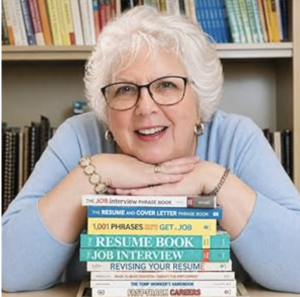 Nancy Schuman, CSP is the former Chief Commuications Officer for LLoyd Staffing.
A recruitment and career specialist, Nancy has more than 40 years in the staffing industry – 27 of them with LLoyd. Now semi-retired, she remains an advocate for career education; she has advised thousands of candidates on their resumes and job searches while also serving as the Careers columnist for a large weekly Long Island newspaper. Nancy has written 11 popular books for job seekers and business professionals. You can find her Author’s page and books on Amazon. She continues to blog for Lloyd and coach job seekers at all levels, offering advice for today’s competitive workplace.