

Job Hugging:
The Workforce Trend That’s Squeezing Both Employers and Workers
Remember when “job hopping” was the buzzword on everyone’s lips? Workers leaped from company to company, chasing better opportunities, higher salaries, and greener pastures. Fast forward to 2025, and the labor market has flipped the script entirely. Welcome to the era of “job hugging”—where employees are holding onto their current positions for dear life, and the implications are reshaping how both workers and employers approach the modern workplace.
What Exactly Is Job Hugging?
Job hugging describes the phenomenon of employees clinging to their current positions despite being unhappy, disengaged, or underpaid. Unlike the Great Resignation of 2021-2022, when workers voluntarily left their jobs in record numbers, today’s employees are staying put—not necessarily because they love their jobs, but because they’re afraid of what lies beyond their current employer’s doors.
The numbers tell a stark story. The rate at which workers are voluntarily leaving jobs has hovered around 2% since the start of 2025—levels not seen consistently this low since early 2016. Meanwhile, the ratio of job openings per unemployed worker has fallen by about half since peaking at about 2:1 in March 2022; it was roughly 1:1 in June 2025. The message is clear: job opportunities have dried up, and workers are responding by gripping their current positions tighter than ever.
The Perfect Storm: What’s Driving This Trend?
Job hugging didn’t emerge in a vacuum. It’s the result of multiple converging forces that have fundamentally altered the employment landscape:
Economic Uncertainty and Market Contraction
The labor market has entered what economists call a “low-hire, low-fire equilibrium.” Employers added 911,000 fewer jobs than originally reported in the year that ended in March 2025, signaling a significant cooling from the red-hot hiring market of just a few years ago. When fewer opportunities exist, workers naturally become more risk-averse about leaving their current roles.
Plummeting Worker Confidence
The Job Opportunity Indicator recorded its steepest ever decline in the second quarter of 2025 to hit its lowest level since tracking began in 2023. This collapse in worker optimism reflects a fundamental shift in how employees perceive their career prospects. When workers don’t believe better opportunities exist, they settle into survival mode rather than growth mode.
The Employee Engagement Crisis
Here’s where job hugging reveals its truly troubling nature. While workers are staying in their positions, they’re increasingly checked out. Global employee engagement declined to 21% in 2024, marking only the second decline in engagement in the past 12 years. Even more concerning, 51% of employees are disengaged in the workplace, while 13% are actively disengaged.
This disconnect between staying and worker engagement creates what consultants are calling a masked crisis. Employees appear stable on paper, but job hugging is masking widespread disengagement, costing employers billions and weakening productivity, innovation and future workforce development.
The Hidden Costs: Why Employers Should Be Worried
For employers who might initially celebrate lower turnover rates, job hugging presents serious long-term challenges:
The Productivity Drain
Disengaged employees don’t just lack enthusiasm—they actively drag down organizational performance. Gallup estimates that disengaged employees cost the global economy $8.8 trillion annually in lost productivity, the equivalent of 9% of global GDP. When your workforce is physically present but mentally absent, the financial impact extends far beyond individual productivity losses.
Innovation Stagnation
Companies thrive on fresh perspectives and creative problem-solving. Job hugging creates a workforce that’s risk-averse and disinclined to push boundaries. Employees who are merely holding on aren’t the ones proposing bold new initiatives or challenging the status quo—they’re focused on staying invisible and avoiding any missteps that might make them expendable.

The Retention Time Bomb
Perhaps most dangerously, job hugging is building resentment that will eventually explode. Workers staying out of fear rather than choice are simultaneously expanding their networks, updating their skills, and preparing for the moment the labor market turns. When opportunities finally materialize, employers could face a delayed mass exodus that makes the Great Resignation look mild by comparison.
Compromised Talent Quality
When employees stay beyond their optimal tenure, companies miss out on fresh talent and new skill sets. The stagnant workforce means organizations aren’t accessing the latest innovations, perspectives, and capabilities that new hires typically bring.
Job Hugging Hits Small and Mid-Sized Businesses Hardest
While job hugging affects organizations across the board, small and mid-sized businesses (SMBs) face unique vulnerabilities that make this trend particularly damaging:
The Concentration Problem
In SMBs, each employee typically wears multiple hats and holds critical institutional knowledge. When just one or two key employees are job hugging—physically present but mentally checked out—the impact reverberates throughout the entire organization. Unlike large corporations that can absorb disengagement across hundreds or thousands of employees, SMBs feel every instance of diminished productivity immediately.
Limited Resources for Re-engagement
Large enterprises have dedicated HR teams, training budgets, and employee engagement programs. SMBs rarely have these luxuries. When worker engagement plummets, smaller companies often lack the infrastructure and resources to diagnose the problem or implement sophisticated employee retention strategies. They’re stuck watching their team members go through the motions without the tools to reverse the trend.
The Innovation Penalty
SMBs rely on agility and innovation to compete with larger rivals. Job hugging creates a risk-averse culture precisely when these businesses need bold thinking and creative problem-solving. For a small business, having even a few employees in job-hugging mode can mean the difference between capturing a market opportunity and watching it pass by.
How SMBs Can Address Job Hugging
The good news? Smaller organizations actually have some inherent advantages in combating job hugging:
- Create Transparency and Open Dialogue: SMBs can foster direct communication between leadership and staff more easily than large corporations. Regular, honest conversations about company direction, individual growth paths, and concerns can help employees feel valued rather than trapped. This direct approach strengthens employee retention by building genuine connection.
- Offer Flexible Growth Opportunities: While SMBs may not always offer the highest salaries, they can provide diverse experiences. Allow employees to stretch into new roles, lead projects outside their job descriptions, or learn different aspects of the business. This variety can re-engage workers who feel stagnant and improve worker engagement across the organization.
- Partner with Staffing Solutions Providers: SMBs don’t need to solve every talent challenge alone. Strategic partnerships with experienced firms like Lloyd Staffing give smaller businesses access to expertise, market intelligence, and flexible staffing solutions that can fill gaps while keeping costs manageable. Bringing in temporary or contract talent through staffing solutions can inject fresh energy and allow permanent employees to move into new challenges.
- Invest in What Matters: You may not have unlimited resources, but focus on what research shows actually drives worker engagement—recognition, meaningful work, professional development, and supportive management. Small gestures, when authentic, often resonate more deeply in smaller organizations than lavish perks do in large corporations.
- Monitor Your Culture Actively: In an SMB, you can often sense shifts in morale and engagement faster than data can reveal them. Don’t ignore warning signs. Address job hugging proactively before it becomes entrenched in your culture and damages your employee retention rates.
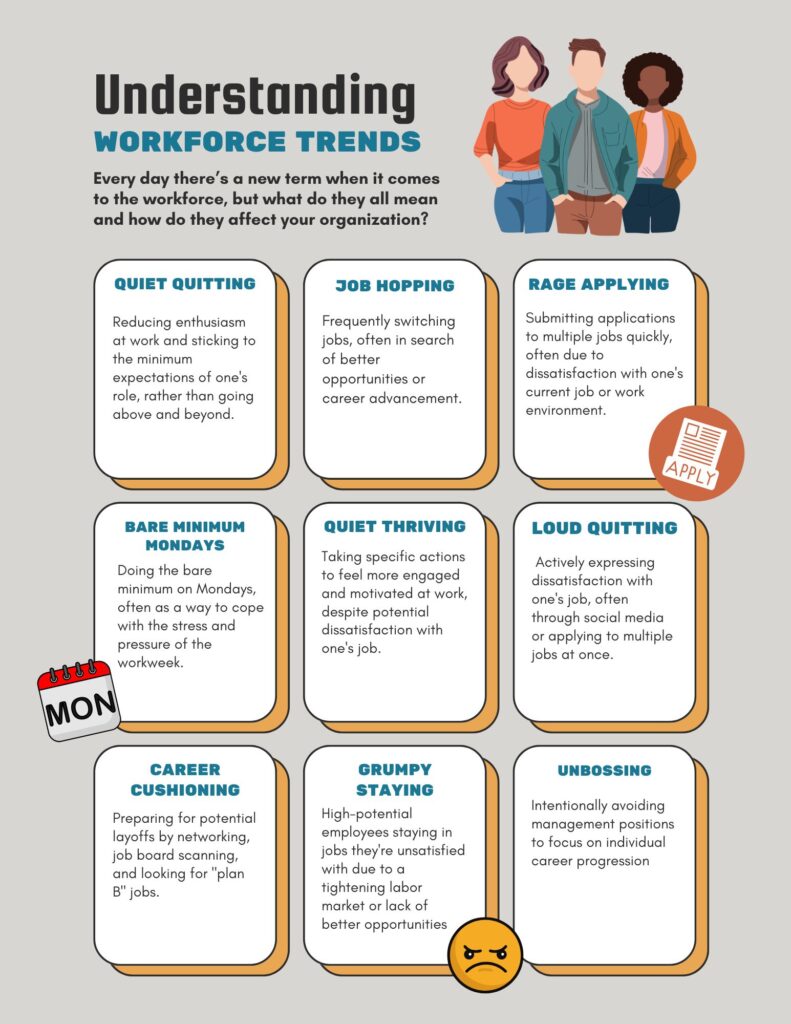
Is Job Hugging Just Another Workforce Fad?
The short answer: No. Unlike trendy workplace concepts that emerge and fade with each business cycle, job hugging reflects fundamental structural changes in how labor markets function.
This isn’t a behavioral choice—it’s an adaptive response to genuine economic constraints. Until the labor market loosens, hiring accelerates, and worker confidence rebounds, employees will continue prioritizing security over satisfaction. The trend may eventually reverse when conditions improve, but the underlying dynamics that created job hugging—technological disruption, economic volatility, and shifting employer-employee relationships—are here to stay.
What may be temporary is the specific manifestation we’re seeing now. The real question isn’t whether job hugging will disappear, but whether organizations and workers can transform this challenging period into an opportunity for rebuilding more sustainable employment relationships.
Why Job Hugging Matters in Today’s Labor Market

The implications of job hugging extend far beyond individual career decisions or corporate retention metrics:
- Reshaping Talent Strategies
Employers can no longer rely on turnover as a natural mechanism for refreshing their workforce or addressing performance issues. With employees staying regardless of satisfaction, companies must become more intentional about internal development, honest performance management, and creating genuine reasons for employees to be engaged—not just present.
- Redefining the Employer-Employee Contract
Job hugging exposes the fragility of the modern employment relationship. Workers are showing up out of necessity, not loyalty. For employers who want to build resilient, innovative organizations, this reality demands a fundamental rethinking of how they engage, develop, and retain talent.
- Creating Market Inefficiencies
When skilled workers remain in positions they’ve outgrown while companies struggle to find qualified candidates for open roles, the entire labor market becomes less efficient. This mismatch between worker capability and job requirements hurts both productivity and economic growth.
How Lloyd Staffing Can Help Navigate Job Hugging

For over 54 years, Lloyd Staffing has been a respected leader in the employment space, helping both companies and professionals navigate every shift in the labor market. Whether you’re an employer struggling with a disengaged workforce or a professional feeling trapped in your current role, our decades of expertise provide staffing solutions that address the realities of today’s job hugging phenomenon:
For Employers
Building Strategic Talent Pipelines: Don’t wait until you’re desperate to fill critical roles. Lloyd Staffing helps companies build robust candidate pipelines that ensure you have access to quality talent precisely when you need it, regardless of labor market conditions.
Accessing Engaged Temporary and Contract Talent: Sometimes the solution to a disengaged permanent workforce is bringing in motivated temporary professionals who bring fresh energy and specialized skills without the long-term commitment. These staffing solutions can help improve overall worker engagement.
Expert Market Intelligence: Our recruiters understand the nuances of job hugging and can help you develop employee retention and engagement strategies that go beyond surface-level perks to address genuine employee concerns.
For Job Seekers
Confidential Career Exploration: If you’re job hugging but want to explore options without risking your current position, Lloyd Staffing provides discrete career conversations that protect your privacy while expanding your possibilities.
Access to Hidden Opportunities: Many of the best positions never appear on job boards. Our extensive network and recruiter connections give you access to opportunities that can genuinely advance your career—not just lateral moves.
Strategic Career Guidance: Our recruiters help you assess whether staying or moving serves your long-term interests, providing honest counsel about labor market conditions, skill gaps, and timing strategies.
Contract and Temporary Options: Testing new industries, companies, or roles through temporary assignments can provide the career development and exploration that job hugging prevents—while maintaining the security of knowing your current role is there if needed.
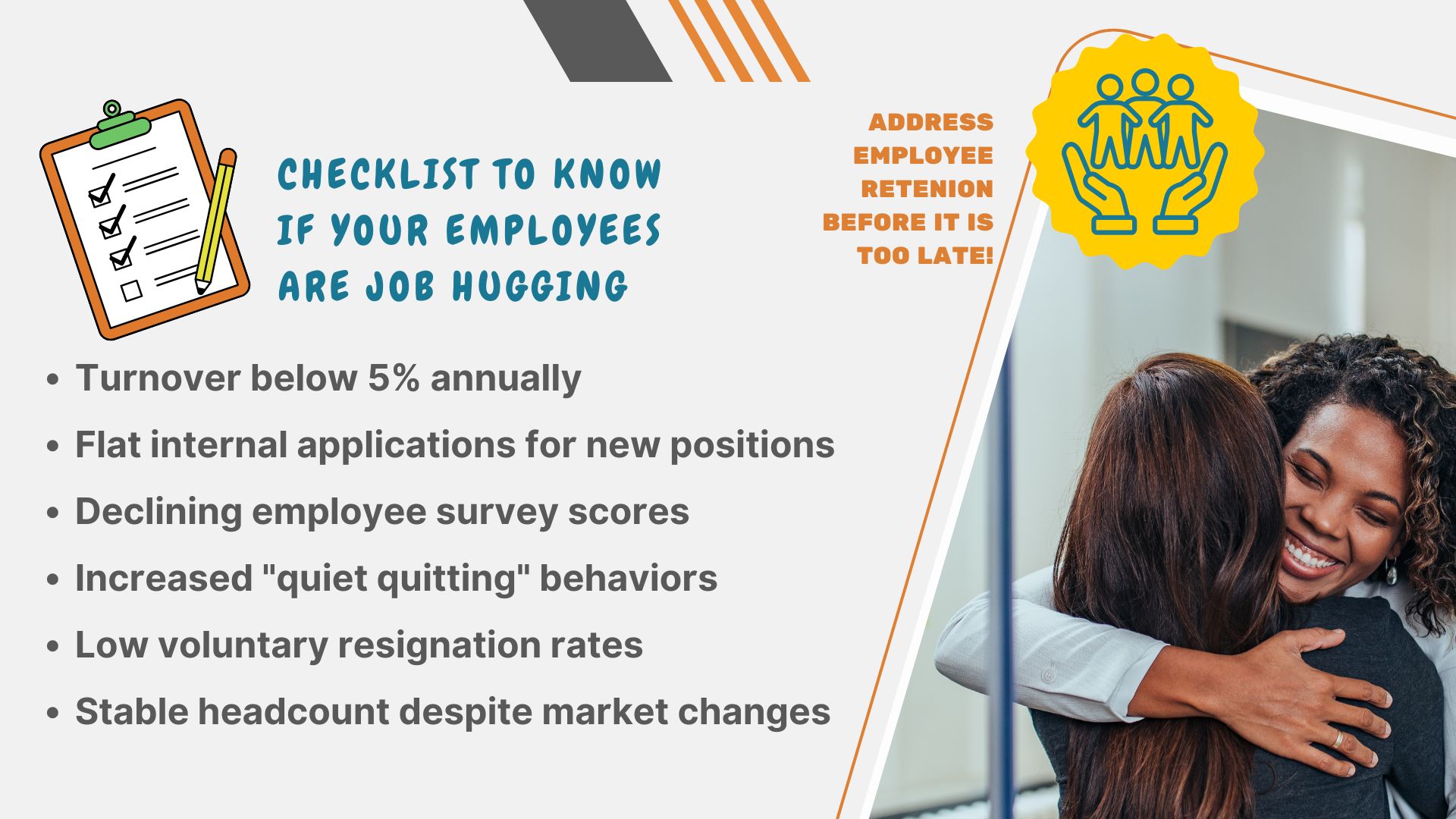
Moving Forward: Turning Job Hugging into Strategic Opportunity
Job hugging doesn’t have to be a career dead-end or an organizational liability. Both employees and employers can take proactive steps:
For employees: Use this period of stability to be intentional. Invest in skills development, expand your network, seek challenges within your current role, and work with staffing solutions partners like Lloyd to stay informed about labor market opportunities.
For employers: Recognize that employee retention without engagement is a pyrrhic victory. Focus on creating work environments where people choose to stay rather than feel compelled to. Invest in development, communicate transparently about company direction, and partner with staffing firms to ensure you have access to talent when internal resources fall short.
The job hugging era isn’t ideal for anyone—but it doesn’t have to be wasted. With the right strategies, support, and partnerships, both workers and employers can navigate this challenging period and emerge stronger when the labor market eventually shifts.
Ready to move beyond job hugging?
Whether you’re an employer looking to energize your workforce or a professional ready to explore what’s next, Lloyd Staffing connects talent with opportunity. Visit us today to discover how our expertise can help you thrive in today’s complex labor market.
************************************
Are you in need of hiring support?
Let us help you find the right person for your role. Hire Now.
Are you working, but unsatisfied with where and when you work? Are you ready for a new role?
Visit our Job Board to apply for one of our employment opportunities.
************************************
Written by Nancy Schuman, CSP, the former Chief Communications Officer for LLoyd
A recruitment and career specialist, Nancy has more than 40 years in the staffing industry – 27 of them with LLoyd. Now semi-retired, she remains an advocate for career education; she has advised thousands of candidates on their resumes and job searches while also serving as the Careers columnist for a large weekly Long Island newspaper. Nancy has written 11 popular books for job seekers and business professionals. You can find her Author’s page and books on Amazon. She continues to blog for Lloyd and coach job seekers at all levels, offering advice for today’s competitive workplace